Mugshot databases have been part of the internet for over two decades. What started as a handful of websites republishing public booking photos has grown into an industry of hundreds of platforms, each with its own policies, business model, and level of accountability. The landscape is changing — and changing fast.
New laws are being passed. Public opinion is shifting. Technology is raising new questions about privacy and surveillance. The mugshot database industry of five years from now will look very different from what exists today. This article looks at where things stand, where they are headed, and what a responsible platform looks like in the middle of all this change.
A Brief History of Mugshot Databases
Before the internet, mugshots were not widely accessible. They existed as public records, technically available to anyone who wanted to go to a courthouse or police department and request them. But the practical barriers — traveling to a government office, filling out paperwork, waiting for a response — meant that most people never saw booking photos unless they appeared in a newspaper.
Local newspapers published mugshots selectively, usually in connection with notable crimes or arrests. The photos appeared in print, were seen by the local community, and then effectively disappeared as yesterday's newspaper was recycled or thrown away.
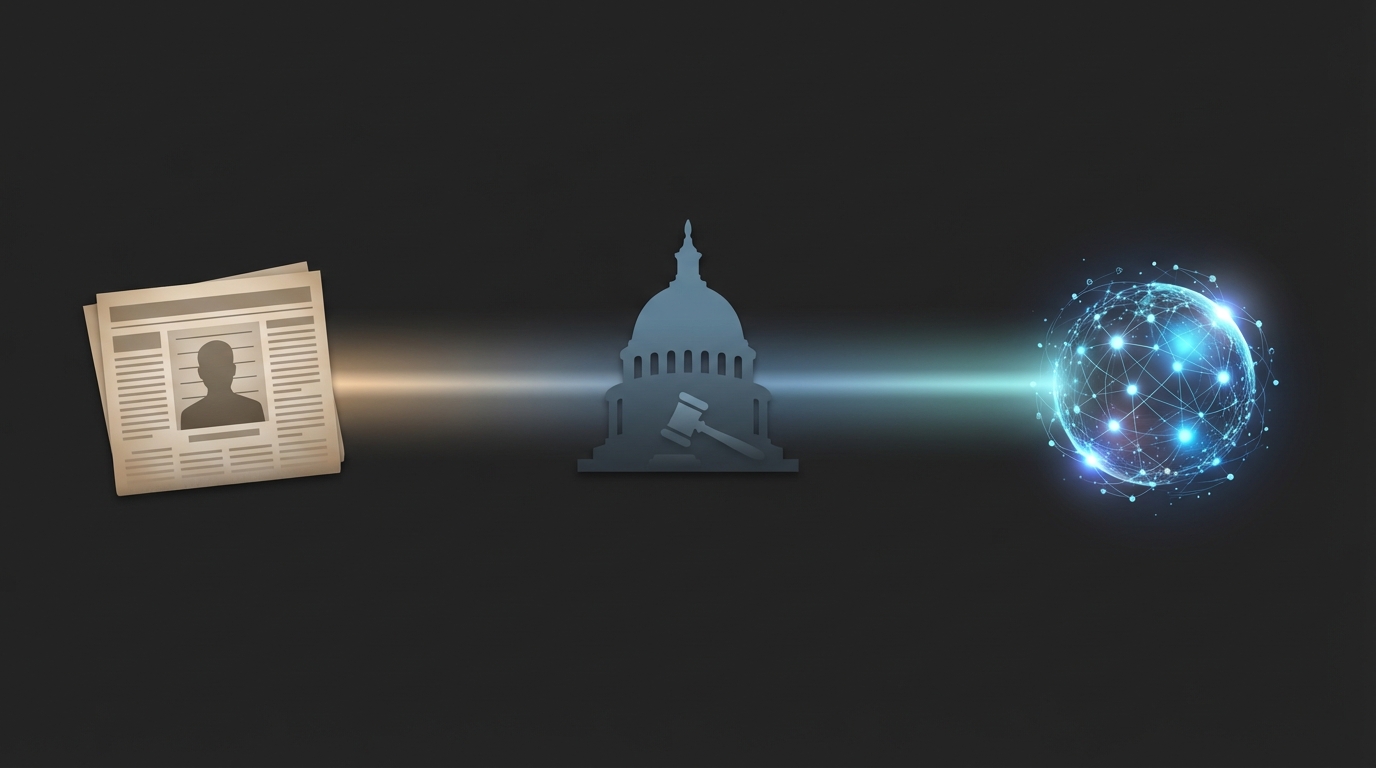
The internet changed everything. In the early 2000s, the first dedicated mugshot websites appeared. They scraped booking photos from county jail rosters and law enforcement websites, compiled them into searchable databases, and published them online. Suddenly, a booking photo was not just a public record sitting in a filing cabinet somewhere — it was a permanent, searchable, globally accessible image attached to a person's name.
By the 2010s, the industry had grown significantly. Hundreds of mugshot websites operated across the internet. Some were straightforward archives of public records. Others built business models around the embarrassment factor — publishing photos to drive traffic and then charging people to have their images removed.
The Current Landscape
Today, mugshot databases exist on a wide spectrum. On one end, you have government-operated jail rosters and court record portals that publish booking information as part of standard transparency practices. On the other end, you have commercial sites that exist primarily to monetize embarrassment through pay-to-remove schemes.
In between, there are platforms of varying quality and ethics. Some publish public records with minimal editorializing and offer free or low-barrier removal processes. Others sensationalize arrests with attention-grabbing headlines, curate "worst mugshot" galleries, and make removal deliberately difficult.
The differences between these platforms matter. A site that publishes public records with appropriate context, offers free removal, and includes protections against harassment is a fundamentally different thing from a site designed to maximize humiliation for profit. Yet from the outside — from the perspective of someone whose mugshot appears on the internet — they can all feel the same.
Legislative Trends: More Regulation Is Coming
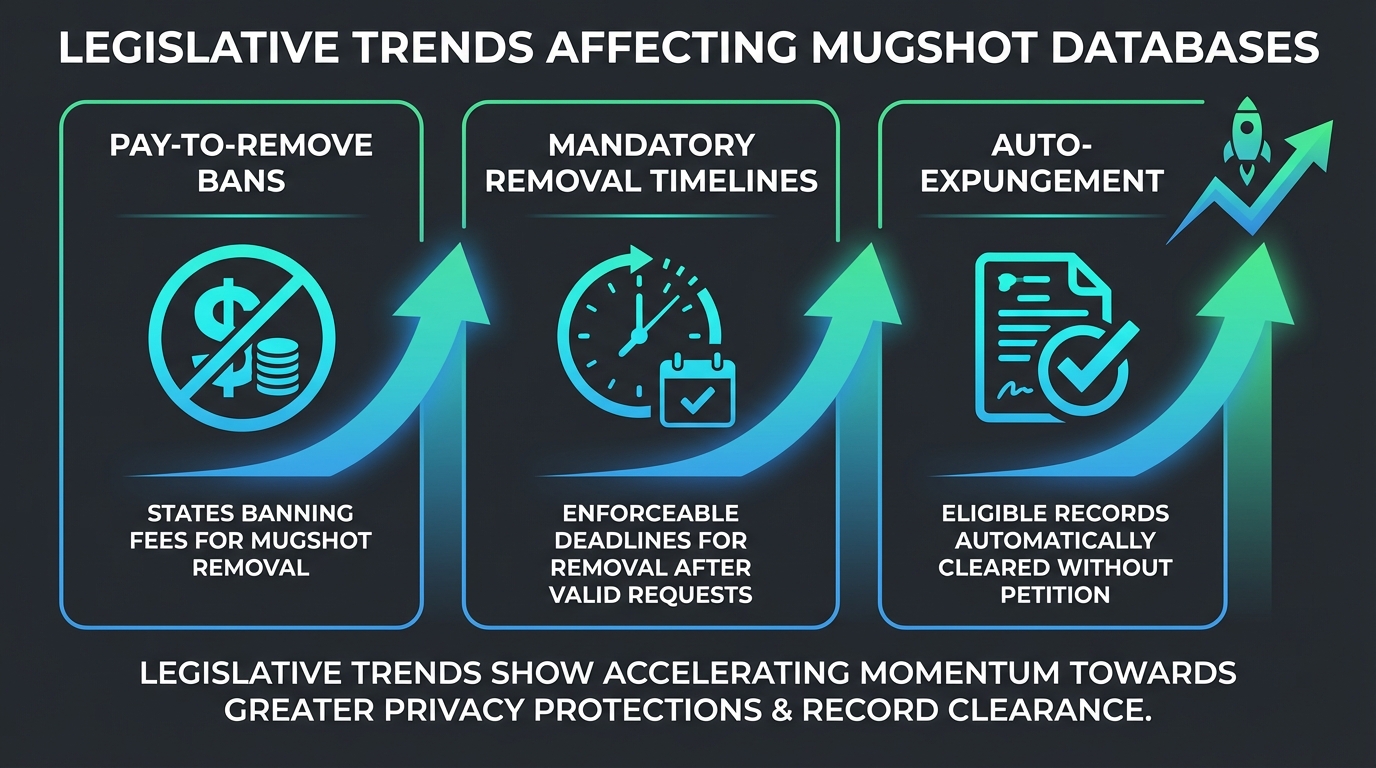
State legislatures across the country have been paying increasing attention to mugshot websites. The legislative trend is clear: more regulation, more accountability, and more protections for individuals.
Pay-to-Remove Restrictions
Several states have passed laws that specifically target the pay-to-remove business model. These laws typically prohibit mugshot websites from charging fees to remove booking photos, or require that sites honor removal requests within a set timeframe at no cost. The intent is straightforward: if a person's record has been resolved, they should not have to pay to reclaim their online reputation.
This is a trend we support. We have never charged for removal and never will. The pay-to-remove model exploits people at their most vulnerable, and the fact that legislatures are taking action against it is a positive development for the entire industry.
Mandatory Removal Timelines
Some states have gone further, requiring mugshot websites to remove booking photos within a specific number of days after receiving a valid removal request with documentation. These laws create enforceable timelines and, in some cases, allow individuals to sue websites that fail to comply.
Auto-Expungement Laws
One of the most significant developments in criminal justice reform is the push for automatic expungement. In the traditional system, a person whose charges were dropped or who completed a diversion program has to actively petition the court to have their record expunged — a process that often requires a lawyer, filing fees, and multiple court appearances. Many eligible people never go through with it simply because the process is too complicated or expensive.
Auto-expungement laws change that. Under these laws, eligible records are automatically sealed or expunged after a set period, without the individual having to petition for it. Several states have already enacted some form of automatic expungement, and more are considering it.
For mugshot databases, auto-expungement means that the volume of records requiring removal will increase as more records are cleared automatically. Platforms that are not prepared to handle this — that do not have efficient processes for verifying and removing expunged records — will increasingly find themselves out of compliance with the law.
Technology: New Questions, New Concerns
Technology is both driving the mugshot database industry and raising serious questions about where it is headed.
Facial Recognition
The proliferation of mugshot databases has created a massive pool of facial images linked to names and personal information. This raises concerns about facial recognition technology. Law enforcement agencies use facial recognition to match suspects against booking photo databases. Private companies have scraped publicly available mugshot images to build their own facial recognition tools.
The intersection of mugshot databases and facial recognition is an area of growing concern for privacy advocates and lawmakers alike. Questions about consent, accuracy, and potential for misuse are driving legislative proposals at both the state and federal level.
Data Scraping and Republishing
When a mugshot is published on one website, it can be scraped and republished on dozens of others within days. This makes removal a frustrating game of whack-a-mole for individuals — you get your photo taken down from one site, only to find it has appeared on three more.
Some legislative proposals address this by holding republishing sites to the same removal requirements as the original publisher. Technology solutions are also emerging, including tools that help people track where their images appear across the web.
Artificial Intelligence
AI is changing the landscape in multiple ways. On the concerning side, AI can be used to generate or manipulate images, create fake records, or aggregate personal information at a scale that was previously impossible. On the beneficial side, AI tools are being developed to help people monitor their online presence and automate removal requests across multiple platforms.
The rapid pace of AI development means that regulations written today may not anticipate the tools and capabilities of tomorrow. This is an area where ongoing attention and adaptable policy frameworks are essential.
Privacy Legislation: The Bigger Picture
Mugshot-specific laws are part of a broader trend toward stronger privacy protections in the United States. Multiple states have enacted comprehensive privacy laws that give individuals more control over their personal information, including the right to request deletion of personal data from commercial databases.
While most of these laws include exceptions for publicly available government records, the overall direction is toward greater individual control over personal data. As public expectations around privacy continue to evolve, mugshot databases will face increasing pressure to operate transparently and handle personal information responsibly.
At the federal level, conversations about a national privacy law continue. While no comprehensive federal privacy legislation has been enacted yet, the patchwork of state laws creates a complex compliance landscape for any platform that operates nationally. A federal standard could simplify this — or could set a new baseline that platforms must meet.
What a Responsible Platform Looks Like
As regulation increases and public expectations evolve, the platforms that survive and earn public trust will be the ones that operate responsibly. Here is what that looks like in practice.
Official Sources Only
A responsible platform publishes information sourced directly from official public government records — not scraped from other websites, not aggregated from unreliable sources, and not supplemented with unverified information. When the source is official, the information is as accurate as the government agency that produced it.
Free Removal, No Exceptions
If someone has a legitimate reason to have their listing removed — expungement, dismissal, acquittal, inaccuracy — the removal process should be free. No fees, no upsells, no delays designed to frustrate people into paying. This is not just good ethics; it is increasingly the law in many states.
Built-In Protections
A responsible platform does not just publish records and walk away. It builds safeguards into the product to prevent abuse:
- Rating controls that prevent scores from being used as weapons (like our 5.0 display floor)
- Reporting systems that let users flag problematic content
- Moderation with real consequences for bad actors
- Content scanning that catches hate speech, threats, and slurs
These are not optional extras. They are fundamental requirements for any platform that publishes personal information and allows user interaction.
Responsive to Legal Changes
The legal landscape is changing rapidly. A responsible platform stays current with new laws and adapts its practices accordingly. This means monitoring legislation, updating removal policies as needed, and proactively complying with new requirements rather than waiting to be forced.
The Decline of Pay-to-Remove
The pay-to-remove business model is in decline, and that is a good thing. Several factors are driving this shift:
- Legislation. More states are outlawing the practice or imposing heavy penalties on sites that charge for removal.
- Payment processors. Major payment processors have cut off some of the most notorious pay-to-remove sites, making it harder for them to collect fees.
- Public awareness. As more people become aware of how pay-to-remove works, the public backlash against these sites has grown.
- Search engine policies. Search engines have adjusted their algorithms and policies to reduce the visibility of exploitative mugshot sites.
The pay-to-remove model was always built on exploitation. Its decline is a sign that the industry is moving — slowly, unevenly, but unmistakably — toward greater accountability.
Where Things Are Headed
Predicting the future is always uncertain, but the trajectory is clear. Here is what we expect to see in the coming years:
- More regulation. Additional states will pass laws governing mugshot publication, removal timelines, and fee restrictions. Federal legislation remains possible.
- Higher standards. Platforms that do not meet basic ethical standards — free removal, official sources, anti-harassment protections — will face increasing legal and reputational risk.
- More auto-expungement. As automatic expungement expands, platforms will need efficient systems to process removal requests at scale.
- Greater accountability. The era of anonymous, unaccountable mugshot sites operating without consequences is ending. Transparency about ownership, data sources, and business practices will become the norm.
- Technology-driven solutions. New tools will emerge to help individuals manage their digital footprint, track where their information appears, and automate removal requests.
Our Commitment
We built America's Top Mugshot with the understanding that publishing public records comes with real responsibilities. We source our data from official government records. We never charge for removal. We have built protections — a 5.0 rating floor, reporting with nine categories, graduated moderation, automated content scanning — to prevent our platform from being used to harm people.
As standards evolve, we are committed to evolving with them. When new laws are passed, we will comply. When better practices emerge, we will adopt them. When someone reaches out to us with a removal request or a correction, we will respond promptly and treat them with respect.
The future of mugshot databases belongs to platforms that take these responsibilities seriously. We intend to be one of them.
For more on our approach to ethics and privacy, read why we don't shame or humiliate anyone or learn about how digital reputation affects your future. To understand the broader ethical questions involved, see our article on the ethics of public mugshot databases.