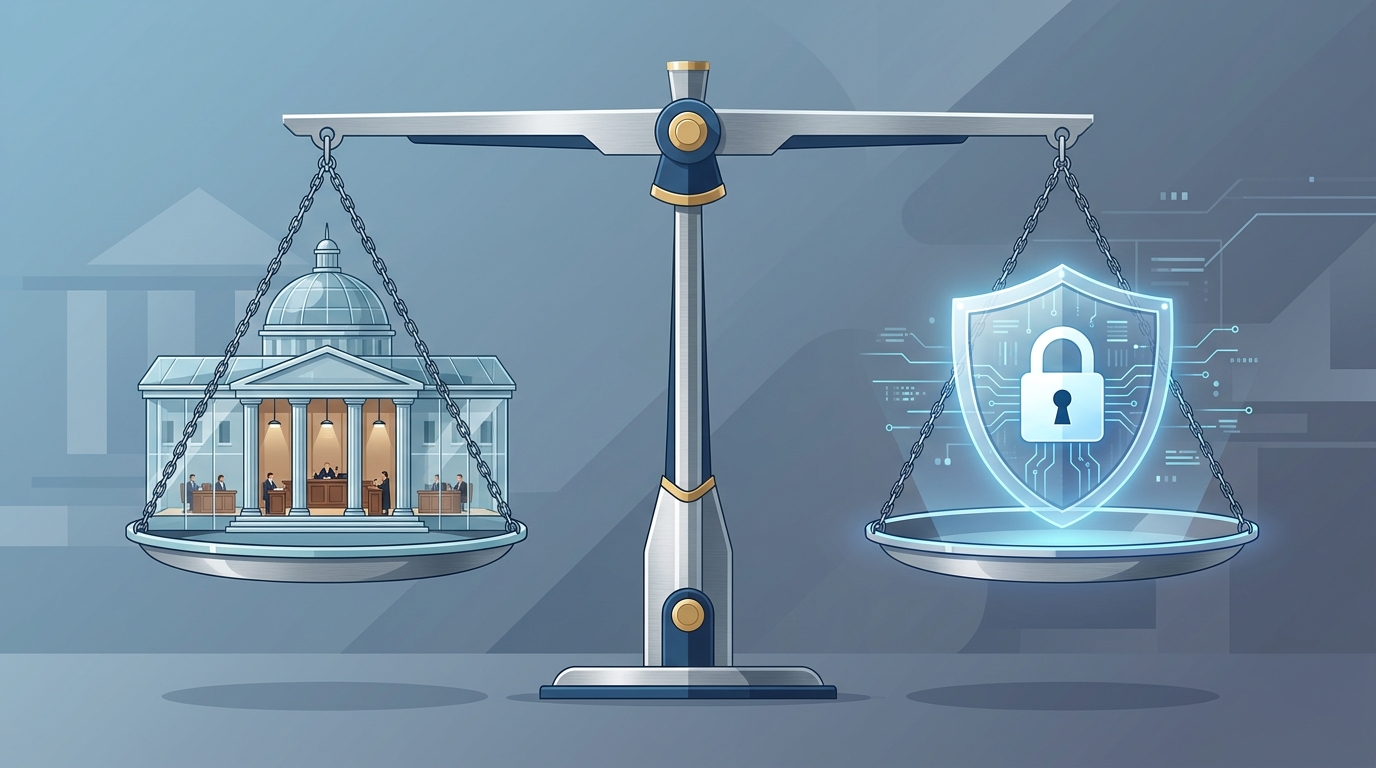
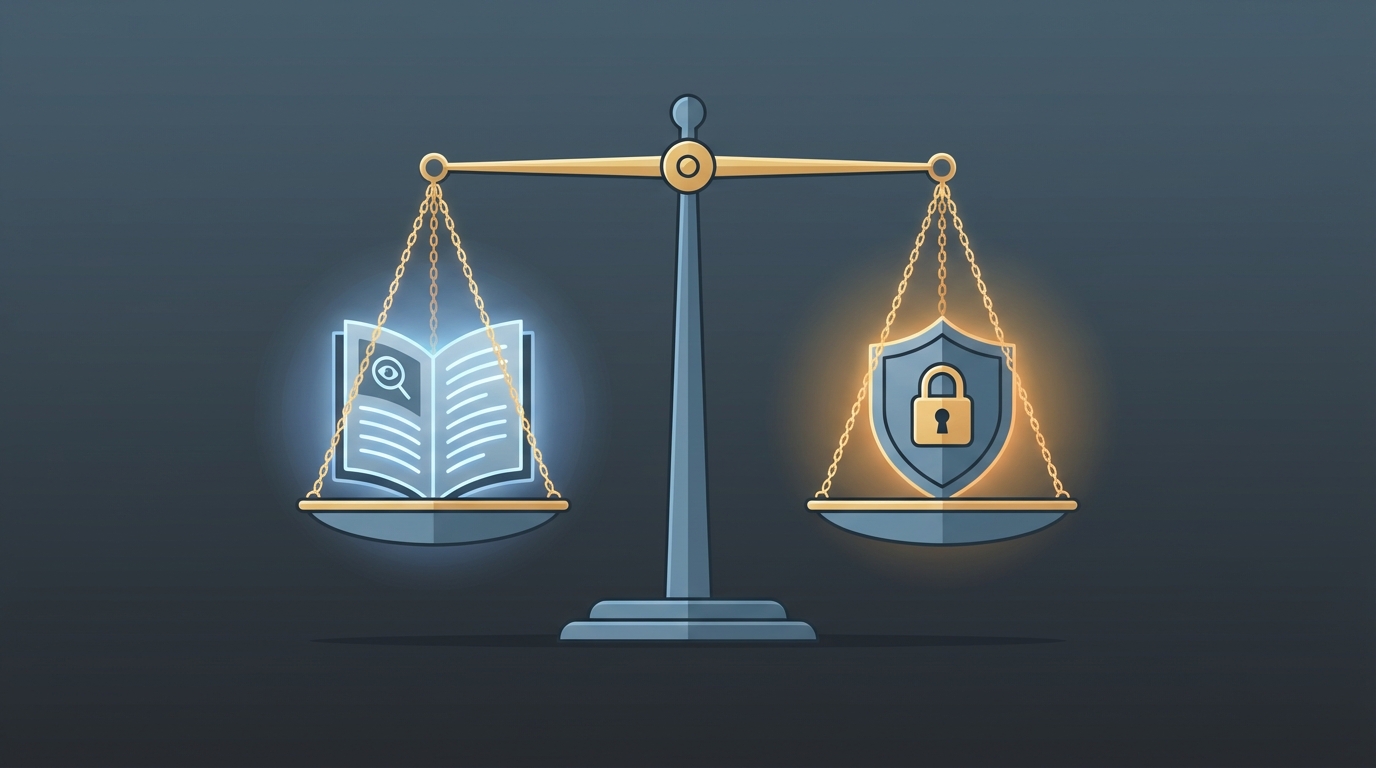
In the United States, two powerful principles often collide: the public's right to access government records and an individual's right to privacy. Nowhere is this tension more visible than with arrest records and mugshots. On one side, open access to government records is a cornerstone of democracy. On the other, a single booking photo can follow a person for years — even if they were never convicted of a crime.
This article explores both sides of the debate honestly. We will look at why arrest records are public, why that causes real harm, what some states are doing about it, and how our platform tries to navigate this difficult balance responsibly.
Why Government Records Are Public
The principle behind public records is simple: in a democracy, the government works for the people, and the people have a right to see what the government is doing. This idea is foundational to American governance and is one of the reasons the Freedom of Information Act (FOIA) exists.
FOIA, signed into law in 1966, gives any person the right to request access to records from federal government agencies. The idea is that government transparency keeps power in check. If law enforcement arrests someone, the public has a right to know — it prevents secret arrests, secret detentions, and abuses of power.
At the state and local level, similar "sunshine laws" and public records statutes give people access to a wide range of government documents, including arrest records, booking photographs, court filings, and case outcomes.
The argument for public records comes down to three core values:
- Government accountability. When arrest records are public, law enforcement agencies cannot operate in the shadows. Citizens can see who is being arrested, how often, and for what — and can hold their government accountable for how it uses its power.
- Public safety. Access to criminal records helps people make informed decisions about their safety and the safety of their communities.
- Judicial transparency. Open court records allow the public to see how the justice system operates — whether it is fair, consistent, and functioning properly.
These are legitimate and important values. A society where the government can arrest people secretly, without any public record, is not a free society.
The Privacy Problem
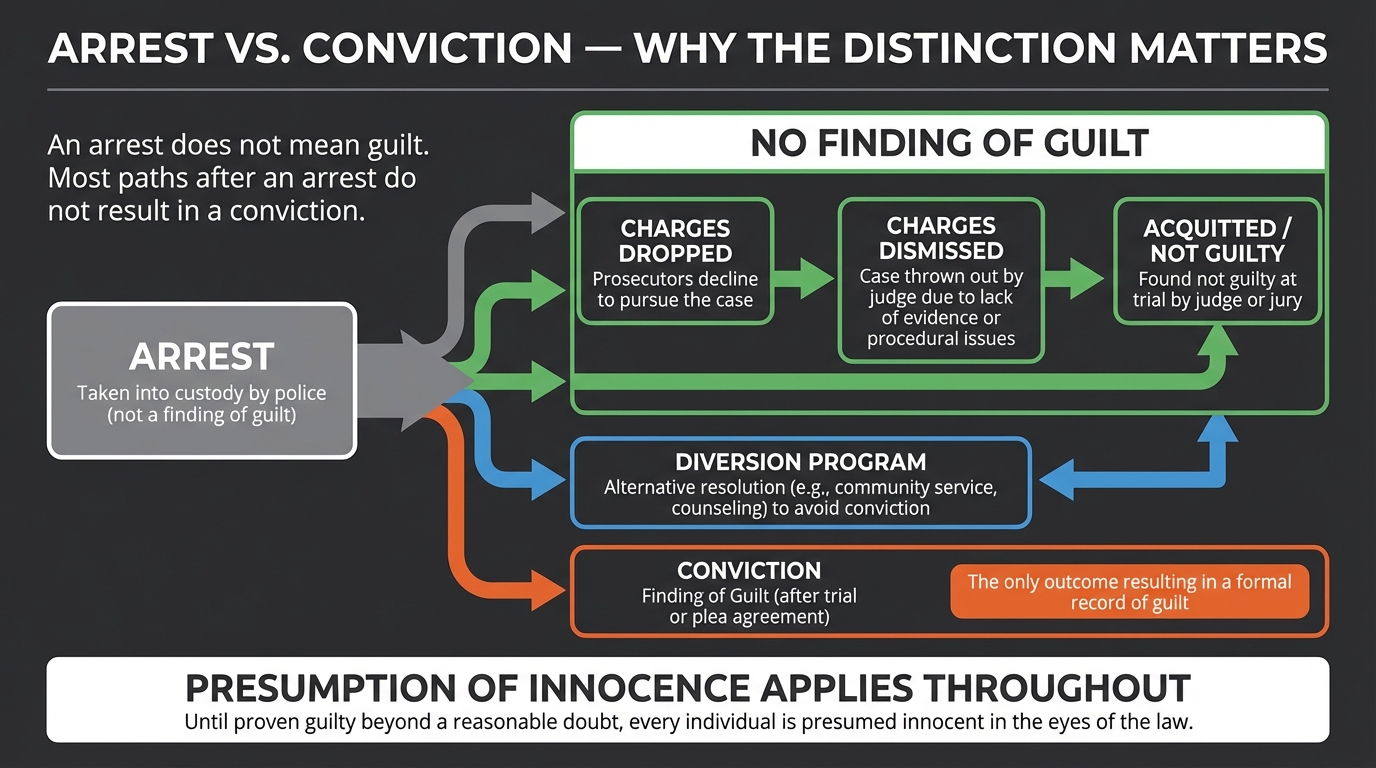
Here is where it gets complicated. An arrest is not a conviction. Being arrested does not mean you are guilty of anything. In the American legal system, every person is presumed innocent until proven guilty in a court of law.
Yet when a mugshot is published — whether by a government agency, a news outlet, or a website — many people assume the worst. A booking photo carries an immediate stigma. It can affect your ability to find a job, secure housing, maintain relationships, and move on with your life, even if the charges were dropped, dismissed, or you were found not guilty.
Consider these situations where a public mugshot causes harm to someone who did nothing wrong:
- A person is arrested based on mistaken identity and released the same day. Their mugshot is now online.
- Charges are filed but later dismissed because there was not enough evidence. The mugshot remains.
- Someone is arrested during a protest and charges are dropped. Employers searching their name find the booking photo.
- A person completes a diversion program, the case is closed, and the record is eligible for expungement — but the mugshot still appears in search results.
In every one of these cases, the person was never convicted. Yet their mugshot — a snapshot from the worst moment of their life — can define them online for years.
How Technology Changed Everything
This debate is not new, but the internet transformed it entirely. Before the internet, arrest records were technically public, but accessing them required effort. You had to physically go to a courthouse or a government office and request specific records. Mugshots existed in filing cabinets, not on websites.
Today, arrest records and booking photos are often posted online within hours of an arrest. Search engines index them. They appear when someone searches your name. And once information is on the internet, it is extremely difficult to remove completely.
This shift changed the practical impact of public records in a fundamental way. When accessing a record required a trip to the courthouse, the "public" nature of arrest records had a natural limitation — it took deliberate effort to find them. Now, anyone with an internet connection can find a mugshot in seconds.
The ease of access means that the consequences of a public arrest record are far more severe than they were thirty years ago. A record that might have faded into obscurity in a filing cabinet now lives permanently on the open internet.
The European Approach: Right to Be Forgotten
Europe has taken a fundamentally different approach to this problem. Under the General Data Protection Regulation (GDPR), individuals in the European Union have what is commonly called the "right to be forgotten." This means people can request that search engines and websites remove personal information about them under certain conditions — particularly when the information is outdated, irrelevant, or no longer necessary.
In Europe, the right to privacy is treated as a fundamental human right, on equal footing with free expression and government transparency. The balance tips differently: individuals have more power to control their personal information online.
The United States does not have an equivalent federal law. The American legal tradition places a heavier emphasis on the First Amendment and the public's right to access information. Removing information from the internet, even personal information, raises significant free speech concerns under U.S. law.
This does not mean one approach is right and the other is wrong. It means different societies have drawn the line in different places — and the conversation about where that line should be is ongoing.
States Are Starting to Act
While there is no federal "right to be forgotten" in the U.S., a growing number of states have recognized that unrestricted mugshot publication causes real harm and have passed laws to address it.
Some of the approaches states have taken include:
- Restricting government mugshot releases. Some states have limited when and how law enforcement agencies can release booking photographs to the public or to third-party websites.
- Banning pay-for-removal schemes. Several states have made it illegal for websites to publish mugshots and then charge fees to take them down. This practice — sometimes called "mugshot extortion" — exploits people by profiting from their arrest records.
- Automatic expungement laws. A growing number of states have passed "clean slate" legislation that automatically expunges certain eligible records after a set period, without requiring the individual to file a petition.
- Requiring removal after case resolution. Some states require that mugshots be removed from government websites after charges are dropped, dismissed, or the person is acquitted.
These laws represent a shift in how American society thinks about the balance between transparency and privacy. The trend is toward recognizing that while arrest records serve a public purpose, their indefinite online publication — especially when no conviction results — causes disproportionate harm.
The Case for Both Sides
Reasonable people disagree about where the line should be drawn. Here is the honest case for each side:
The Case for Open Access
- Transparency is essential to preventing government abuse. If arrest records are hidden, it becomes harder to identify patterns of wrongful arrest, racial profiling, or other systemic problems.
- The public has a legitimate interest in knowing about arrests in their community, particularly for serious offenses.
- Restricting access to public records sets a precedent that could be used to hide other government actions from public scrutiny.
- News organizations rely on access to arrest records for reporting on crime, public safety, and the justice system.
The Case for Stronger Privacy Protections
- An arrest is not proof of wrongdoing. Publishing mugshots treats people as guilty before they have had their day in court.
- The permanent online nature of mugshots creates a punishment that far exceeds anything the legal system intended, especially when no conviction results.
- Mugshot publication disproportionately affects people who are already vulnerable — those who cannot afford lawyers, those from marginalized communities, and those who lack the resources to fight for removal.
- People who have served their sentences, completed programs, or had their records expunged deserve the fresh start the legal system intended to give them.
The truth is that both sides have valid points. The challenge is finding a balance that serves the public interest without destroying individual lives.
How We Navigate This Balance
At America's Top Mugshot, we take this tension seriously. We believe it is possible to provide public access to government records while also treating the people in those records with basic respect. Here is how we approach it:
- We publish only publicly available government records. We do not create or fabricate information. Every listing on our platform comes from official public sources.
- We state clearly that an arrest is not a conviction. Our platform includes language emphasizing the presumption of innocence. Being listed on our site does not mean a person is guilty of any crime.
- We offer free removal — always. If your record has been expunged, your charges were dismissed, or your case was otherwise resolved, we will remove your listing at no cost. We never charge fees for removal. Visit our contact page and select "Record Removal Request," or email us at info@americastopmugshot.com. You can learn more about the process in our step-by-step removal guide.
- We prevent abuse of our rating system. Our platform includes a rating floor that prevents people from using ratings as a weapon to harass or humiliate someone. Ratings cannot drop below a baseline that ensures fairness.
- We provide a report button on every listing. If anyone sees content that is inaccurate, misleading, or inappropriate, they can report it directly and our team will review it.
- We respond to removal requests promptly. Every removal request is reviewed within 24 to 48 business hours. We require a government-issued ID and official documentation (such as a court order or proof of expungement) to verify the request.
We do not pretend this is a perfect solution. The tension between public records and privacy is a genuine societal challenge, and no single platform can resolve it. But we believe that operating with transparency, offering free removal, and treating individuals with respect is the responsible approach.
Where the Conversation Goes from Here
The debate over public records and privacy is far from settled. As more states pass mugshot protection laws, as automatic expungement becomes more common, and as public attitudes evolve, the balance will continue to shift.
What seems clear is that the status quo — where a single arrest can brand someone online for life, regardless of outcome — is increasingly seen as unjust. At the same time, the principle of government transparency remains as important as ever.
Finding the right balance will require thoughtful legislation, responsible platforms, and ongoing public conversation. We are committed to being part of that conversation in good faith.
If you want to learn more about how the legal system handles record clearing, read our comprehensive guide on understanding expungement and record removal.