

If you or someone you know has been arrested, you may have heard the word "expungement" and wondered what it actually means. In simple terms, expungement is the legal process of getting your arrest or criminal record erased — as if it never happened. It can change your life by opening doors that a criminal record keeps shut: jobs, housing, education, and peace of mind.
This guide explains expungement in plain language. We will cover what it is, who qualifies, how the process works, what it costs, and what happens to online mugshots after your record is cleared.
What Is Expungement?
Expungement is a court order that directs law enforcement agencies and courts to erase or destroy your arrest or criminal record. Once a record is expunged, it is treated as though it never existed. In most states, you can legally answer "no" if an employer, landlord, or anyone else asks whether you have ever been arrested or charged with that offense.
Think of it like this: expungement does not just hide your record — it effectively wipes the slate clean for that particular case. The goal is to give people who have resolved their legal matters a genuine fresh start.
Expungement vs. Record Sealing: What Is the Difference?
These two terms are often used interchangeably, but they are not the same thing.
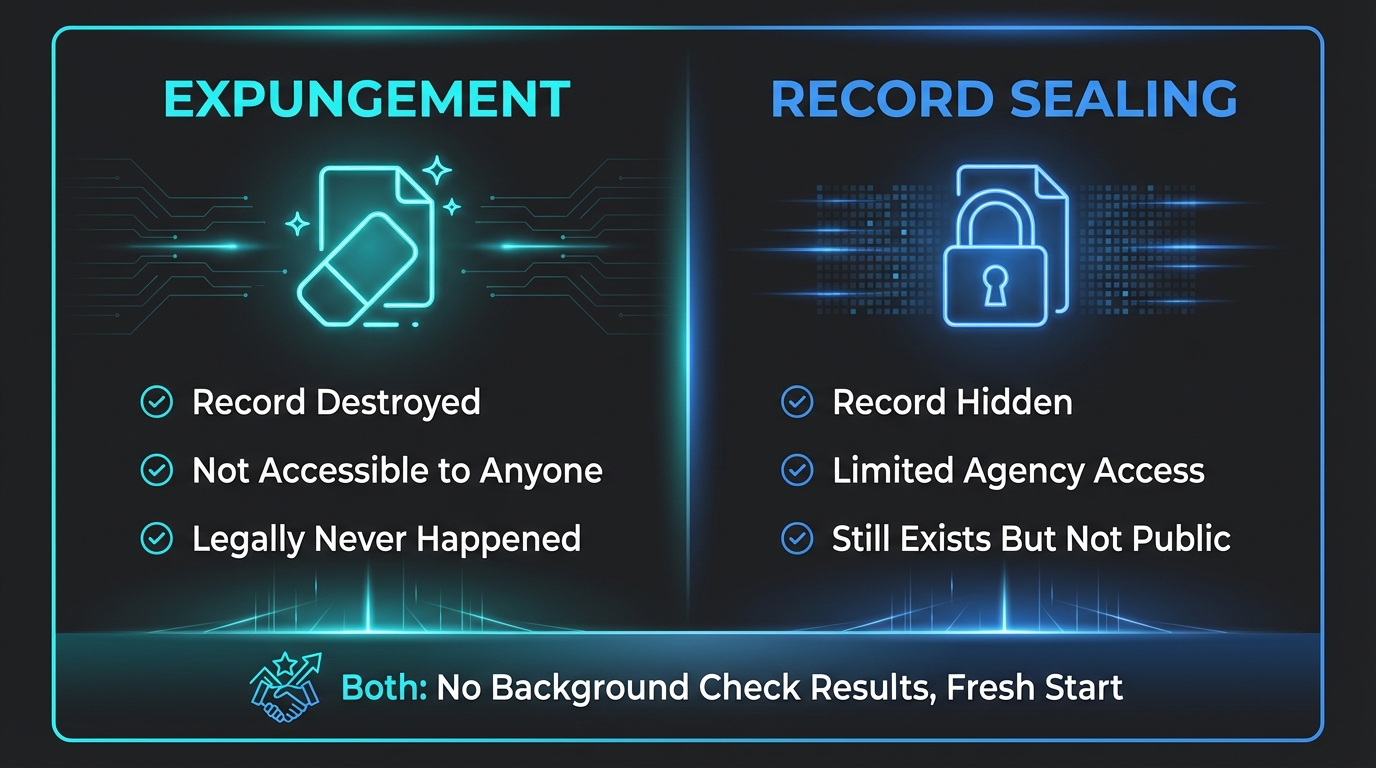
- Expungement means the record is destroyed or erased. It is removed from court files and law enforcement records. In the strictest sense, the record no longer exists.
- Record sealing means the record still exists but is hidden from the general public. Sealed records do not appear on standard background checks. However, certain government agencies — like law enforcement, courts, or immigration authorities — may still be able to access a sealed record under specific circumstances.
For most practical purposes, both expungement and sealing achieve the same result in everyday life. Your record will not show up when a potential employer or landlord runs a background check. The main difference is whether the record is technically destroyed or simply locked away.
Which option is available to you depends on your state's laws and the details of your case. Some states only offer sealing, some only offer expungement, and some offer both.
Who Qualifies for Expungement?
Eligibility rules vary from state to state, and there is no single national standard. However, the following situations commonly qualify for expungement across many states:
- Dismissed charges. If the charges against you were dropped or dismissed, you generally have a strong case for expungement.
- Acquittals. If you went to trial and were found not guilty, many states allow you to expunge the arrest record.
- Completed diversion programs. If you successfully finished a pretrial diversion program, deferred adjudication, or similar alternative sentencing program, your case may be eligible.
- First-time offenses. Some states offer expungement for first-time offenders, particularly for minor offenses like misdemeanors or low-level nonviolent charges.
- Juvenile records. Many states have more generous expungement rules for offenses committed as a minor. Some automatically seal or expunge juvenile records when the person turns 18.
- Arrests that never led to charges. If you were arrested but the prosecutor decided not to file charges, you may be able to expunge the arrest record.
- Certain convictions after a waiting period. Some states allow expungement of specific misdemeanor or nonviolent felony convictions after you have completed your sentence and remained crime-free for a set number of years.
Serious violent felonies, sex offenses, and crimes involving minors are generally not eligible for expungement in any state. If you are unsure whether your case qualifies, consider consulting a lawyer or your local legal aid office.
How the Expungement Process Works
While the specifics differ by state, the general process follows a similar path:
- Determine your eligibility. Research your state's expungement laws or consult a lawyer to find out whether your case qualifies. Many court websites provide self-help guides and eligibility checklists.
- Obtain your records. You will typically need a copy of your arrest record, court disposition (the outcome of your case), and any other documents related to the offense.
- File a petition. You submit a formal petition or application to the court that handled your case. This usually involves completing specific forms provided by the court and paying a filing fee.
- Notify relevant parties. In many states, you must notify the prosecutor's office and sometimes the arresting agency about your petition. They may have the opportunity to object.
- Attend a hearing (if required). Some cases require a court hearing where a judge reviews your petition. Not all states require a hearing — some handle expungements through paperwork alone.
- Judge issues a decision. The judge reviews your case and either grants or denies the expungement. If granted, the court issues an order directing agencies to erase or seal the record.
- Agencies process the order. Law enforcement agencies and courts update their records according to the expungement order.
How Long Does Expungement Take?
The timeline depends on your state, the court's caseload, and the complexity of your situation. Straightforward cases — like dismissed charges with no complications — can sometimes be resolved in a few weeks. More complex cases, or courts with heavy backlogs, may take several months.
Some states have enacted automatic expungement laws (sometimes called "clean slate" laws) that clear eligible records without requiring you to file a petition. Even with automatic expungement, processing times vary and it can take time for records to be fully updated across all systems.
Do You Need a Lawyer?
In most states, you are not required to hire a lawyer to file for expungement. Many courts provide the necessary forms and instructions so that people can handle the process themselves. If your case is straightforward — for example, charges were dismissed and you have no other record — you may be able to do it on your own.
That said, a lawyer can be helpful in several situations:
- Your case is complicated (multiple charges, multiple jurisdictions, or older records)
- The prosecutor is likely to object to your petition
- You are unsure whether you qualify under your state's specific rules
- A hearing is required and you want someone to represent you before the judge
If you cannot afford a lawyer, look into legal aid organizations in your area. Many provide free expungement assistance, especially for people with low incomes. Some communities also hold "expungement clinics" where volunteer lawyers help people file petitions at no cost.
What Does Expungement Cost?
The primary cost is the court filing fee, which varies by state. Filing fees can range from under a hundred dollars to several hundred dollars depending on the jurisdiction. Some states offer fee waivers for individuals who demonstrate financial hardship — you typically need to fill out a separate form showing your income and expenses.
If you hire a lawyer, legal fees are an additional expense and vary widely based on the complexity of your case and your location. Free legal aid and pro bono expungement clinics can eliminate this cost entirely.
What Happens to Online Records After Expungement?
This is one of the most important — and frustrating — questions people face after getting their record expunged. Here is the reality:
An expungement order applies to government records. It directs courts and law enforcement agencies to erase or seal your record. However, it does not automatically remove information that was published on websites, in news articles, or in other online sources before the expungement was granted.
This means that even after your record is legally expunged, your mugshot or arrest information might still appear online. To get it removed, you generally need to:
- Contact each website individually and request removal. Most legitimate websites will honor expungement orders when you provide proper documentation.
- Provide proof of your expungement — typically a copy of the court order.
- Be persistent. Some websites respond quickly, while others may take time or require follow-up.
Be cautious of any website or service that charges you a fee to remove your mugshot after expungement. Legitimate platforms should not charge for removing records that have been legally expunged.
How America's Top Mugshot Handles Expungement
We believe that if a court has cleared your record, your mugshot should not continue to follow you online. Here is how we handle it:
- We never charge fees for removal. Unlike some websites that demand payment to take down a mugshot, our removal process is completely free.
- Simple submission process. Visit our contact page and select "Record Removal Request" as the subject. In your message, include a link to your listing and explain that your record has been expunged or your charges were resolved.
- What we need from you: A copy of your government-issued ID and your court order or other official proof of expungement, dismissal, or case resolution.
- You can also email us at info@americastopmugshot.com with the same information.
- Response time: Our team reviews every request and responds within 24 to 48 business hours.
- What happens to the record: Once we verify your documentation, your listing is removed from public view. The record is hidden from all searches and browsing on our platform.
For a detailed walkthrough of the removal process, read our step-by-step guide on how to remove or update a mugshot online.
State-by-State Variation
One of the most challenging aspects of expungement is that every state has its own rules. There is no federal expungement law that applies across the board for state-level offenses. Here are some of the key differences you will encounter:
- Automatic expungement states. A growing number of states have passed "clean slate" laws that automatically expunge certain eligible records after a set period — you do not have to petition the court. Examples include states that automatically clear arrests that did not lead to charges or certain misdemeanor convictions after several years.
- Petition-only states. Many states require you to actively file a petition with the court. The record will remain on your file until you take action.
- Waiting periods. Some states require you to wait a certain number of years after completing your sentence before you can apply for expungement. Waiting periods typically range from one to ten years depending on the severity of the offense.
- Eligible offenses. What qualifies for expungement varies widely. Some states are relatively generous, allowing expungement of many misdemeanors and some felonies. Others are more restrictive, limiting expungement to dismissals and acquittals only.
Because the rules vary so much, it is worth researching your specific state's laws. Your local court's website, your state bar association, or a legal aid organization can point you in the right direction.
Common Misconceptions About Expungement
There are several myths about expungement that cause confusion. Let us clear up the most common ones:
- "Expungement erases everything instantly." The court order is just the first step. It takes time for agencies to process the order and update their records. Online records require separate removal requests to each website.
- "If I was arrested, I cannot get it expunged." An arrest alone — without a conviction — is one of the most common grounds for expungement. Many people do not realize they can clear an arrest from their record.
- "Expungement is only for minor offenses." While serious violent crimes are generally excluded, many states allow expungement for a broader range of offenses than people expect, including some felonies.
- "I need an expensive lawyer." While a lawyer can help, many people successfully file for expungement on their own. Free legal aid is widely available for those who need assistance.
- "Sealed records can never come back." Sealed records are hidden from the public, but in certain narrow circumstances — like applying for law enforcement jobs or specific government positions — a sealed record may still be visible. Fully expunged records offer stronger protection.
- "All websites will automatically remove my mugshot." Unfortunately, many websites do not monitor court records for expungement orders. You will likely need to contact them directly. On our platform, we make this process straightforward and free.
Taking the First Step
Expungement can feel overwhelming, but it does not have to be. Start by finding out whether your case qualifies under your state's laws. If it does, gather your records, file the petition, and follow through. The process takes some effort, but the result — a clean record and a fresh start — is worth it.
If your mugshot appears on America's Top Mugshot and your record has been expunged, dismissed, or sealed, submit a removal request and we will take care of it at no cost. You can also learn more about how our platform balances public records with individual rights in our article on freedom of information vs. right to privacy.